
"I need a real finance function — not just a bookkeeper and a spreadsheet." We hear a version of that line constantly, and by the time a founder says it out loud, they've usually been running a patchwork setup for months.
Here's the thing almost nobody explains clearly: bookkeeper, controller, and CFO aren't three levels of the same job. They're three completely different jobs that happen to all involve numbers. Hiring the wrong one for your stage is why so many founders feel like they're paying for financial help and still flying blind.
The one-sentence version of each role
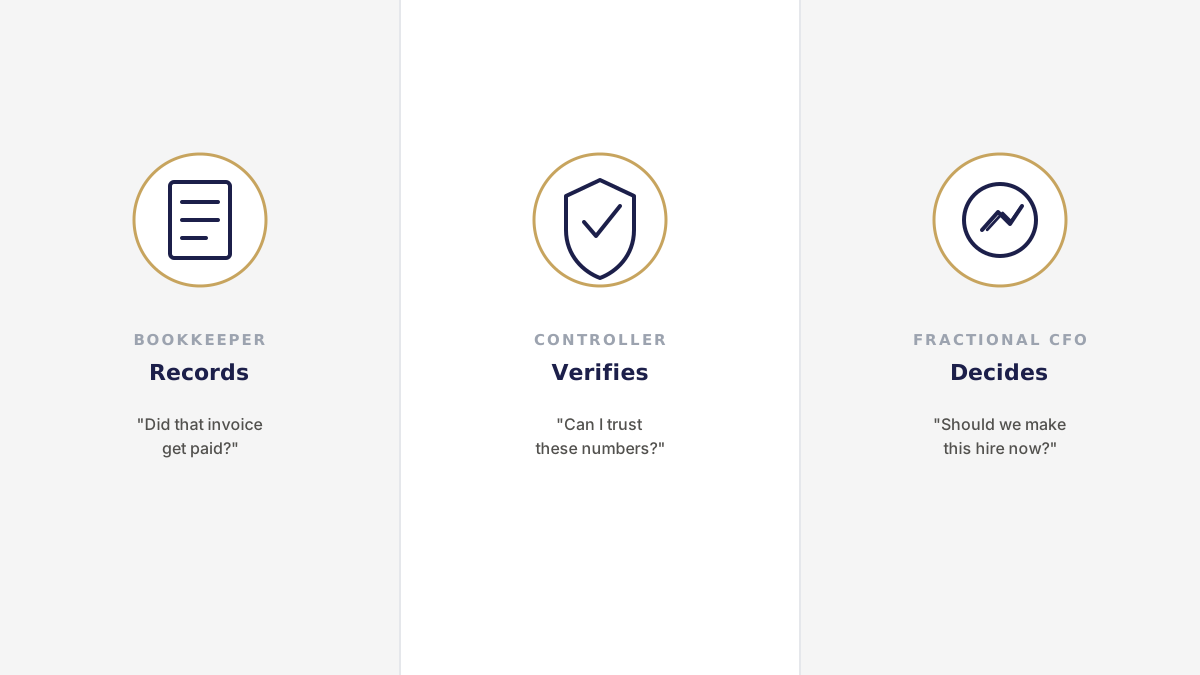
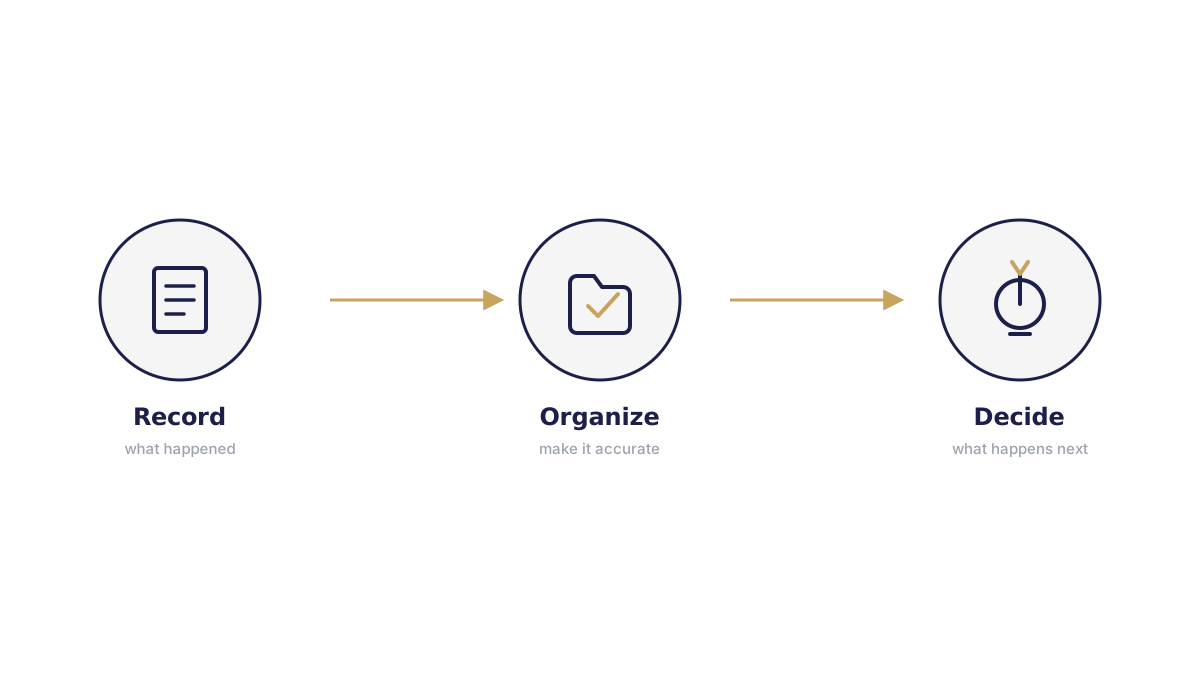
If you remember nothing else from this post, remember this: a bookkeeper records what happened, a controller makes sure what happened is accurate and organized, and a CFO decides what should happen next.
Bookkeeper — the record-keeper
A bookkeeper logs transactions, reconciles your bank accounts, and keeps your books current. If your question is "did that invoice get paid?" or "why doesn't this account balance?" — that's a bookkeeper's job. Most early-stage companies need this from day one, whether that's a person, a firm, or software with light oversight.
Controller — the accuracy-and-process owner
A controller sits above the bookkeeper. They own the month-end close, make sure your financial statements are actually correct (not just recorded), build internal controls so nothing slips through, and make sure your books would survive an audit. If your question is "can I trust these numbers?" — that's a controller's job.
Fractional CFO — the strategist
A CFO doesn't primarily touch the books. A CFO uses what the bookkeeper and controller produce to answer forward-looking questions: How many months of runway do we really have? Should we make this hire now or in Q2? What does an investor need to see before they'll write a check? If your question starts with "should we..." — that's a CFO's job.
Why this confusion costs founders real money
The most common mistake we see: a founder hires a fractional CFO to fix problems that a controller or bookkeeper should have caught in the first place. You end up paying strategist rates for reconciliation work — or worse, getting strategic advice built on books that were never actually accurate.
The pattern we see over and over: the company doesn't have a strategy problem. It has an unreconciled-books problem wearing a strategy costume.
The reverse mistake happens too: a founder keeps stretching their bookkeeper to answer strategic questions the role was never built for, and decisions get made on gut feel instead of a real model.
A quick way to tell which one you need right now
| If you're asking... | ...you probably need a |
|---|---|
| "Is this transaction recorded correctly?" | Bookkeeper |
| "Can I trust my P&L and balance sheet?" | Controller |
| "Should we make this hire / raise now / cut this spend?" | Fractional CFO |
| "What do investors need to see before they'll fund us?" | Fractional CFO |
| "Why don't my books close on time every month?" | Controller |
The real answer: most growing companies eventually need all three
This isn't an either/or decision forever — it's a sequencing question. Pre-revenue and early-stage companies usually need clean books first (bookkeeper), then process and accuracy as things get more complex (controller), then strategic direction once there's real money and real decisions on the table (CFO). The mistake is buying the wrong one for where you are today, or trying to bolt three separate freelancers together and hoping they talk to each other.
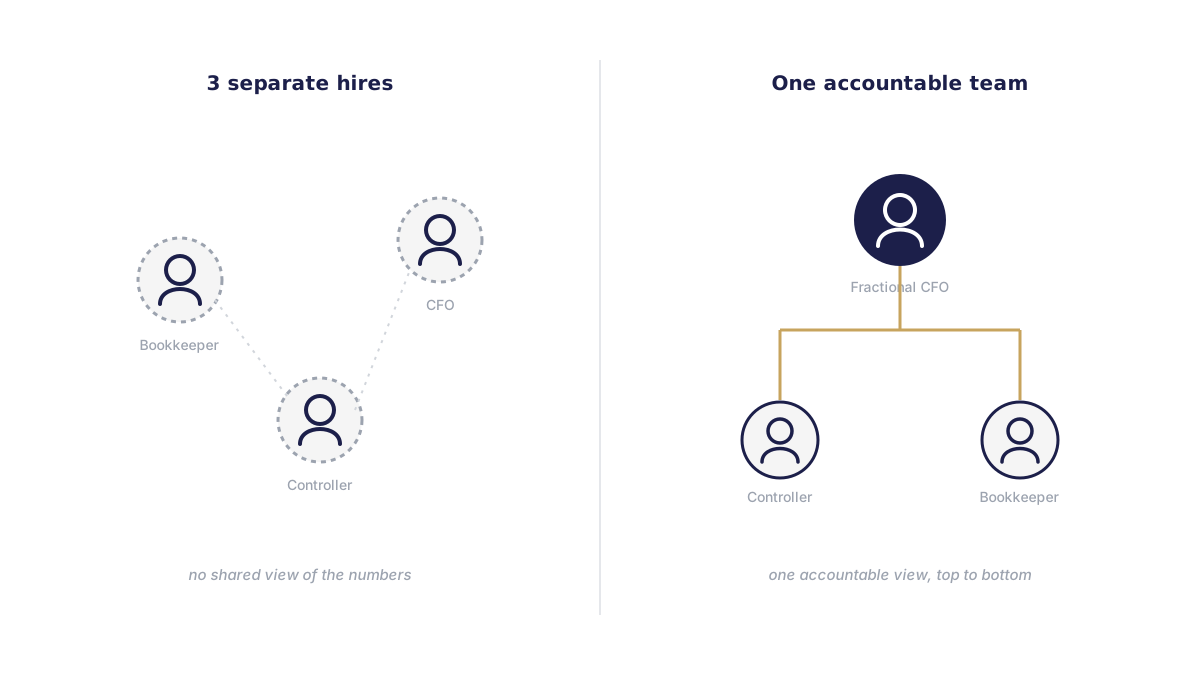
The real cost of "we'll just hire separately" is rarely the individual rates — it's the coordination nobody's paying for.
That's the exact gap our Fractional Finance Team closes: one accountable CFO who designs what your stage actually needs, then leads the controller and bookkeeper work underneath it — so you're not stitching together three people who've never spoken to each other.
Not sure which stage you're at?
Take the 60-second diagnostic and we'll tell you straight — bookkeeping, a controller, a full fractional team, or none of the above yet.